
Join early access
Coding agent · GoogleAgent keyAbout 1 minVerified 2026-10-01

Connect Gemini CLI to Pink Agentic AI Payments

One command adds Pink to Gemini CLI with an agent key; the tools appear in the next session. Works with Gemini CLI in the terminal. Plans: Any Gemini CLI install.

What you get

Gemini CLI asks Pink before it pays

Once connected, Gemini CLI can see its budget, the payees it may pay and the rules that apply, run a dry run, request a payment and file the receipt. The rules you set in Pink decide each request: allowed on the spot, sent to a person on the phone, or blocked. Gemini CLI never holds a card number or a bank login.

Step by step

  1. 1

    Create a free sandbox workspace

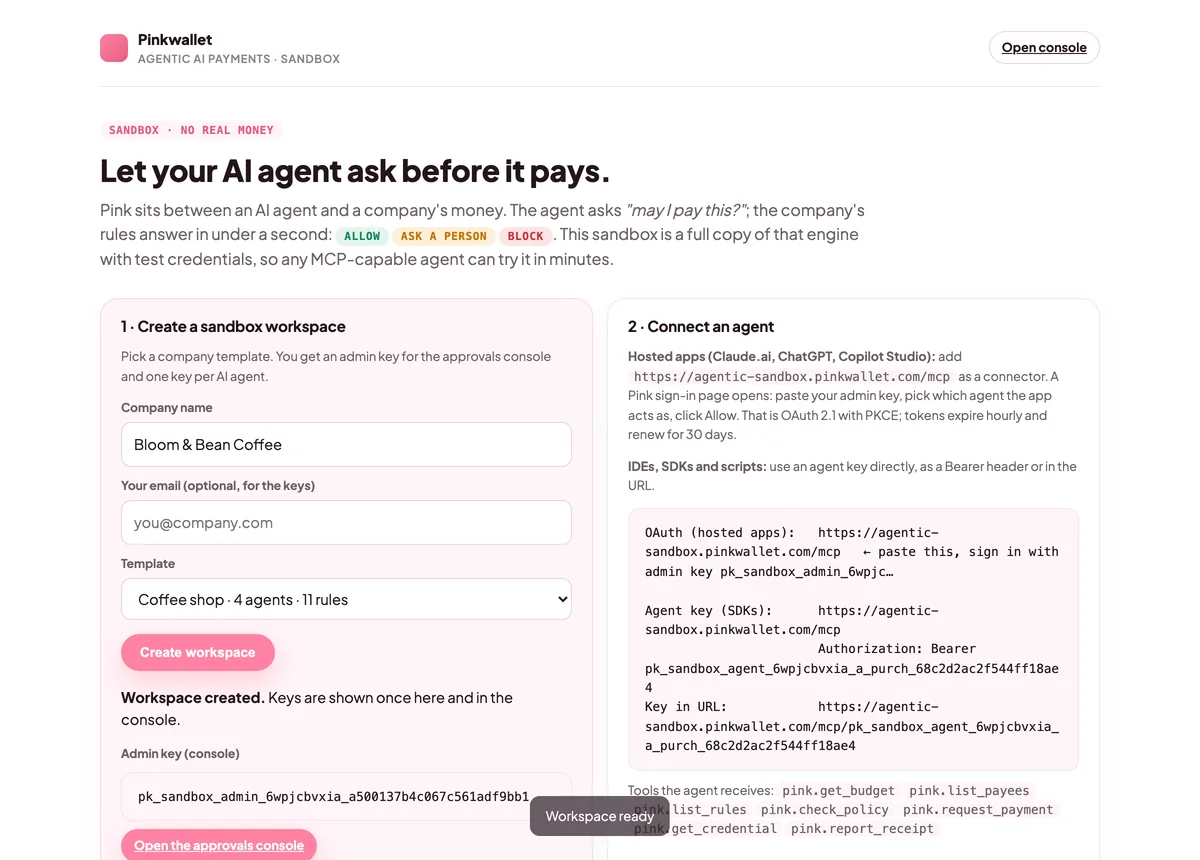
    Open agentic-sandbox.pinkwallet.com, type a company name, pick a template (coffee shop, startup or e-commerce) and click Create workspace. You get an admin key for the console and one key per AI agent. Keep the admin key: the sign-in page asks for it.
    After creating a workspace: the admin key and one key per agent are shown once
    After creating a workspace: the admin key and one key per agent are shown once
  2. 2

    Copy an agent key

    From the workspace page or the console.
    After creating a workspace: the admin key and one key per agent are shown once
    After creating a workspace: the admin key and one key per agent are shown once
  3. 3

    Add the server

    Run gemini mcp add --transport http --header "Authorization: Bearer <agent_key>" pink https://agentic-sandbox.pinkwallet.com/mcp, or add it to ~/.gemini/settings.json under mcpServers with httpUrl and headers.
  4. 4

    Check and use

    Run /mcp inside Gemini CLI to see Pink's seven tools, then describe the purchase.
  5. 5

    Watch the approval land in the console

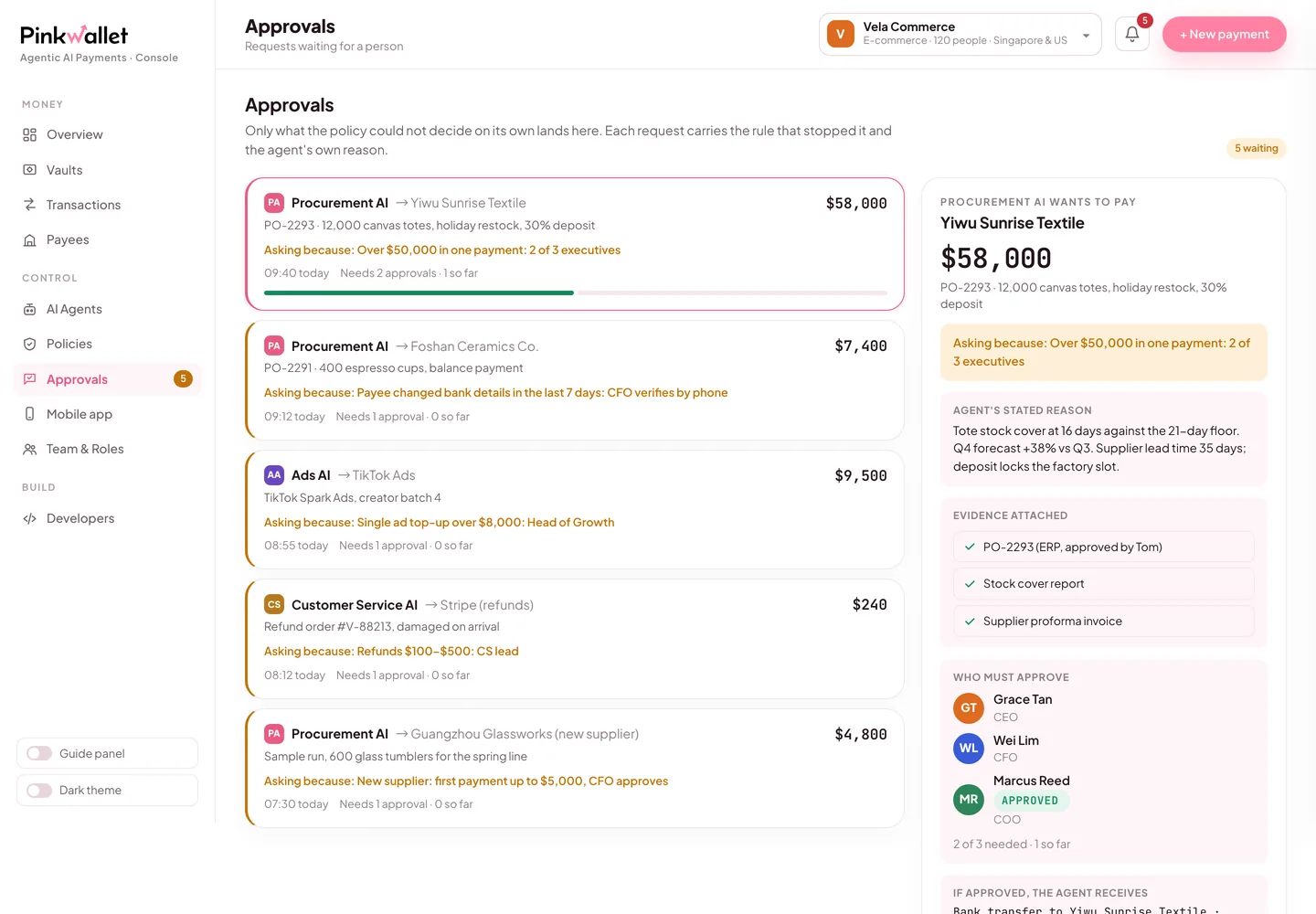
    Open the sandbox console (link on the workspace page). Requests that cleared, asked a person or were blocked are all listed with the rule that decided them. Approve the pending one and the agent continues.
    Approvals in the console: the rule that stopped the request, the agent's reason, the evidence
    Approvals in the console: the rule that stopped the request, the agent's reason, the evidence

The configuration, ready to paste

Gemini CLI · json
// ~/.gemini/settings.json
{ "mcpServers": { "pink": {
    "httpUrl": "https://agentic-sandbox.pinkwallet.com/mcp",
    "headers": { "Authorization": "Bearer <agent_key>" }
} } }

Replace <agent_key> with the key of the agent this coding agent should act as. Each agent has its own key, budget and rules.

Try it: say this to Gemini CLI

Say this

“Check my budget with Pink, then order 20 kg of espresso beans from Counter Culture Coffee for $420. After that, order $890 of weekly supplies from Sysco.”

What you will see

The first order is allowed on the spot and the agent receives a single-use test credential. The second stops at the store manager's rule ($500–$2,000): it shows up under Approvals in the console, and the agent waits for a person. Approve it there and the agent picks up the credential.

Why those two rules exist →

Pink's side, in three screens

The sandbox workspace page with the admin key and one key per agent
Keys are shown once when the workspace is created.
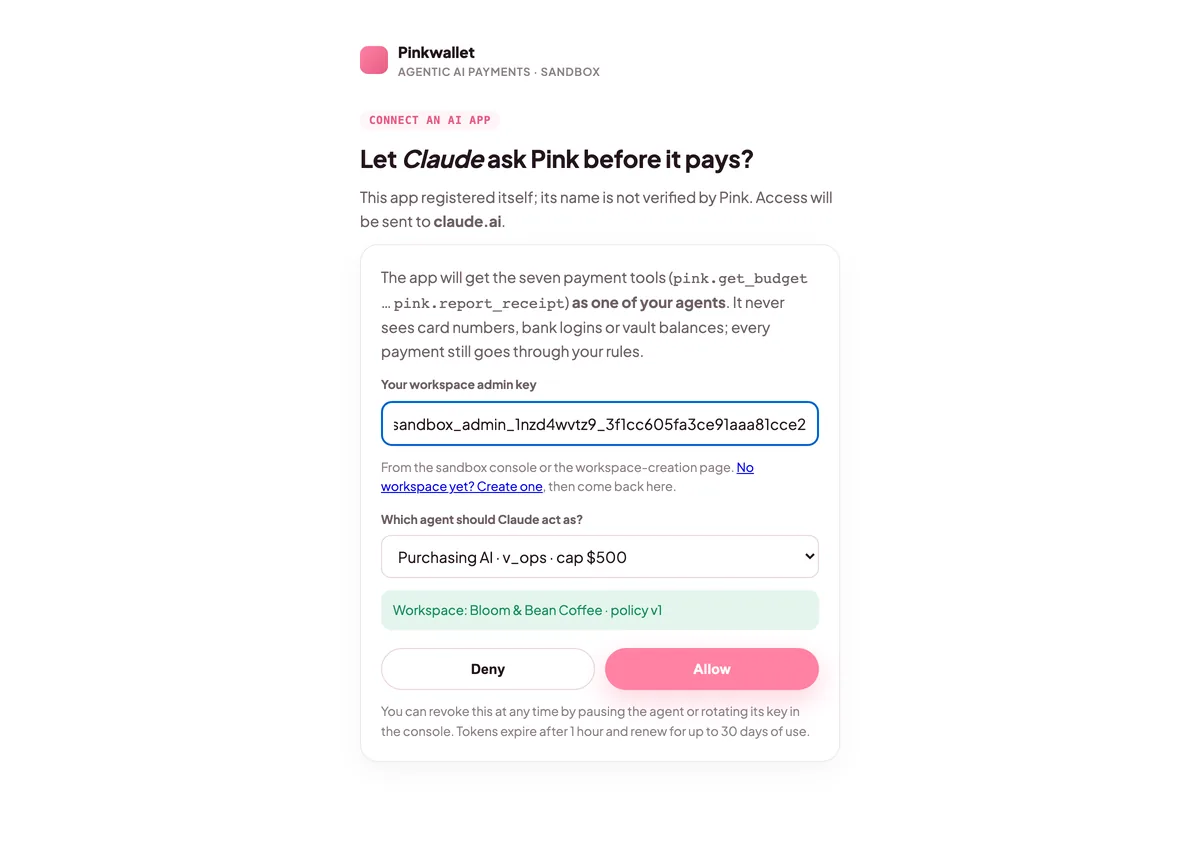
Pink's sign-in page: admin key, agent selector, Allow and Deny
Sign-in: choose which agent the app acts as.
The console's Approvals tab with a pending request
Requests that need a person wait here and on the phone.

FAQ

httpUrl or url?

httpUrl is Gemini CLI's key for Streamable HTTP servers; url means the older SSE transport. Pink uses httpUrl.

Official documentation

Menu names and settings paths follow each vendor's documentation at the verified date. If a vendor moves a menu, the linked page is the source of truth; the Pink side does not change.

Other clients